Call Garreth And Cameron: 0115 9893488

Free UK shipping on all orders over £100.00

Useful Links
Your Account

Talk to us

Garreth, Cameron & CallyAI · Mon to Fri
Call 0115 989 3488Free advice on your build
Thanks, that’s with us. We reply the same working day.
That didn’t send. Please give us a call instead.
Social
Follow by Email
Facebook
Twitter
Instagram
Tiktok
Social
FacebookXInstagramTikTokYouTubePinterest

Drilled, Grooved Or Plain? Choosing The Right Brake Disc For Road And Track

Every Tarox kit on this site asks the same question near the bottom of the order form: which disc style? Four faces, one price, and no explanation of what you are actually choosing between. So the phone rings, and Cameron talks somebody through grooves and holes for the fourth time that week. This page is that conversation written down.

The short version is that the face of a disc is a tool, and each machining pattern does a different job for a different kind of driving. The long version is below: what grooves do, what holes do, why race cars mostly run neither, and which face we would put on your car depending on what it does at weekends. Everything here applies to the Tarox conversion kits we build to order, and to HiSpec builds where the face is specced the same way.

  • Grooves wipe and de-glaze the pad face, clearing dust, water and gas so the pad keeps its bite
  • Drilled faces on a Tarox disc are countersunk, machined into a heat treated disc, never punched through a cheap casting
  • Plain faces put the most pad on the most iron, which is why circuit and endurance racing mostly runs them
  • On a Tarox kit you pick the face at order time: C83, F2000, Sport Japan or D95 at the same price
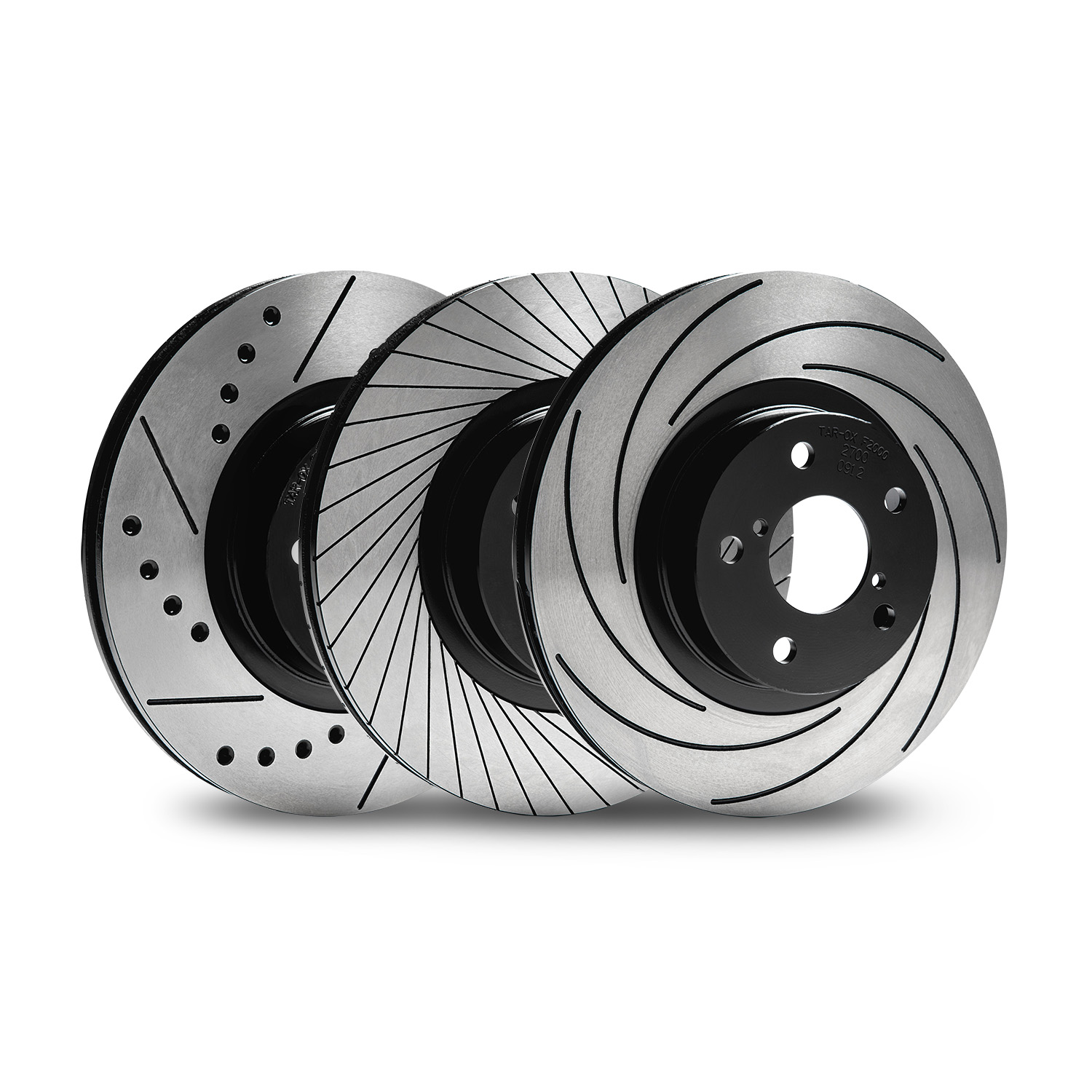
TAROX brake disc faces compared: grooved, drilled and plain
The Tarox family. Same two piece floating construction underneath, different face on top.

What the face of a disc actually does

A brake pad works best on a clean, flat, consistent surface. Everything about face machining is there to protect that surface while the pad and disc get hot and dirty together. The three approaches solve it three different ways.

G

Grooved

Shallow channels cut across the braking face. Each groove wipes the pad as it passes, cleaning off dust, water and the glaze that forms when a pad overheats. The pad keeps its bite and the pedal keeps its feel, at the cost of slightly faster pad wear. This is the pattern that suits most fast road cars.

D

Drilled

Holes machined through the face help the disc shed heat and gas, take a little rotating weight out, and look the part behind an open wheel. Done properly the holes are countersunk into a heat treated disc. Done cheaply they are punched into a plain casting, which is where the cracking stories come from.

P

Plain

No grooves, no holes, maximum pad contact and maximum iron on the face. There is nothing in the face to concentrate stress and nothing taken out of the swept area. It is what most circuit and endurance machinery runs, because when the brakes are always hot and always working, contact area wins.

The Tarox faces, one by one

Tarox have been machining disc faces since before most of the industry: the C83 was the first grooved disc you could buy for a road car, and the year in its name tells you how long ago that was. These are the faces you will meet on our order forms, using Tarox’s own descriptions of what each one is for.

TAROX C83 straight groove brake disc

C83

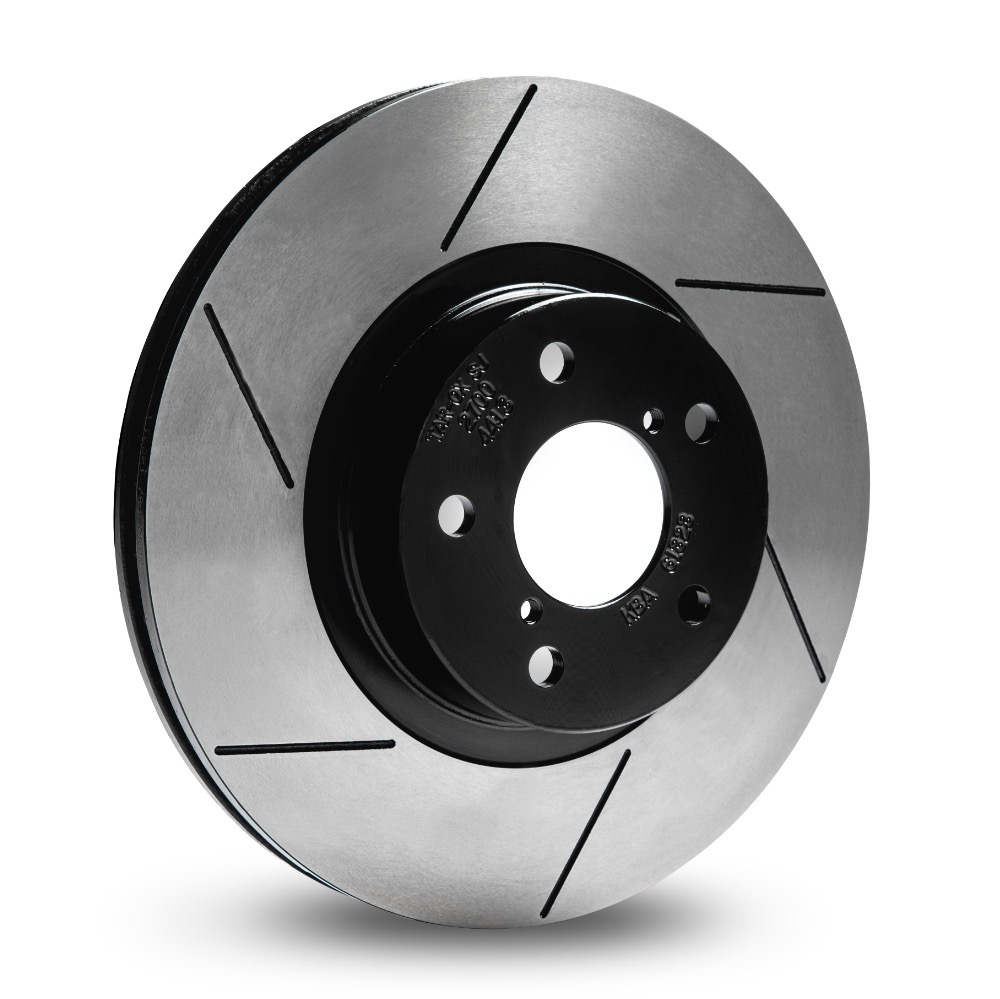
Six short straight grooves, evenly spaced. The original 1983 design, and still the road choice: the grooves keep the pad clean and de-glazed without chewing through it. If the car is a quick daily, this is the sensible answer.
TAROX G88 40 groove brake disc

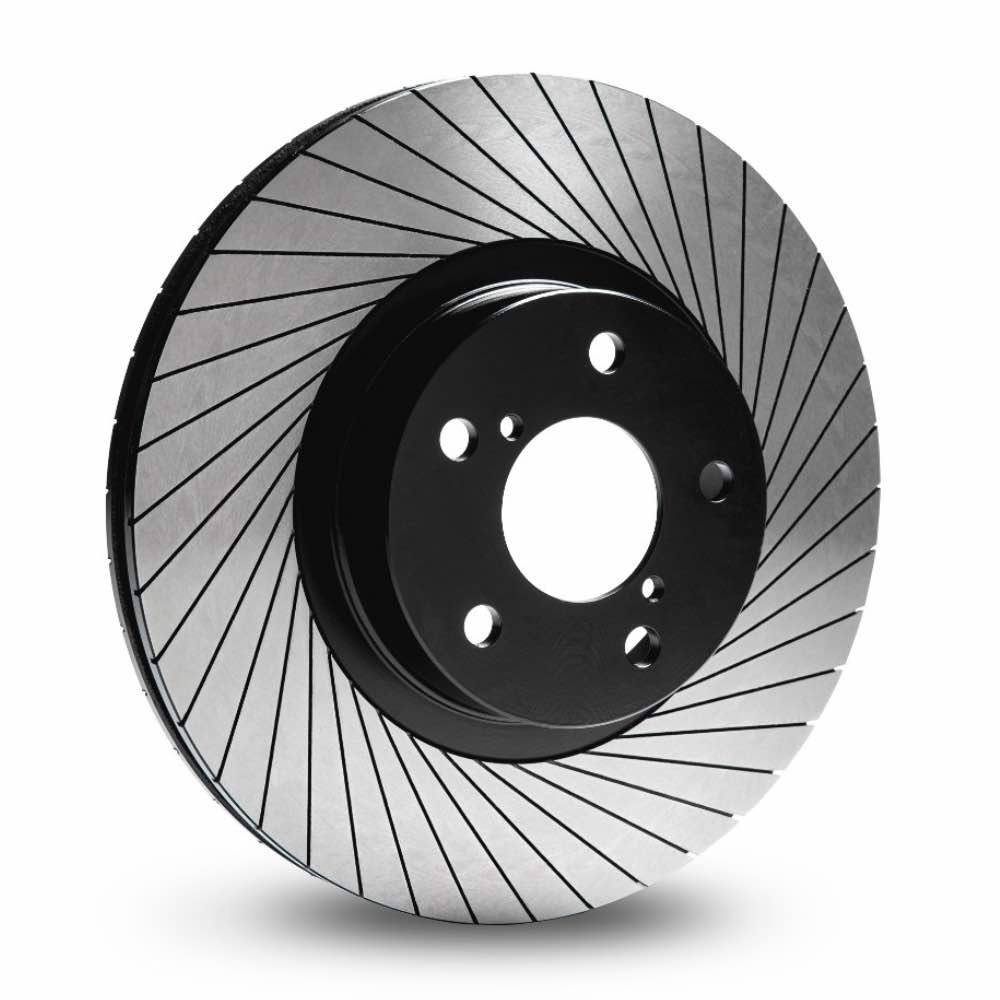
G88

Forty fine radial grooves per side, running edge to edge with a chamfered lead. Tarox's street tuning favourite: the full width sweep wipes the whole pad face, and it looks superb behind a big wheel.
TAROX F2000 spiral groove brake disc

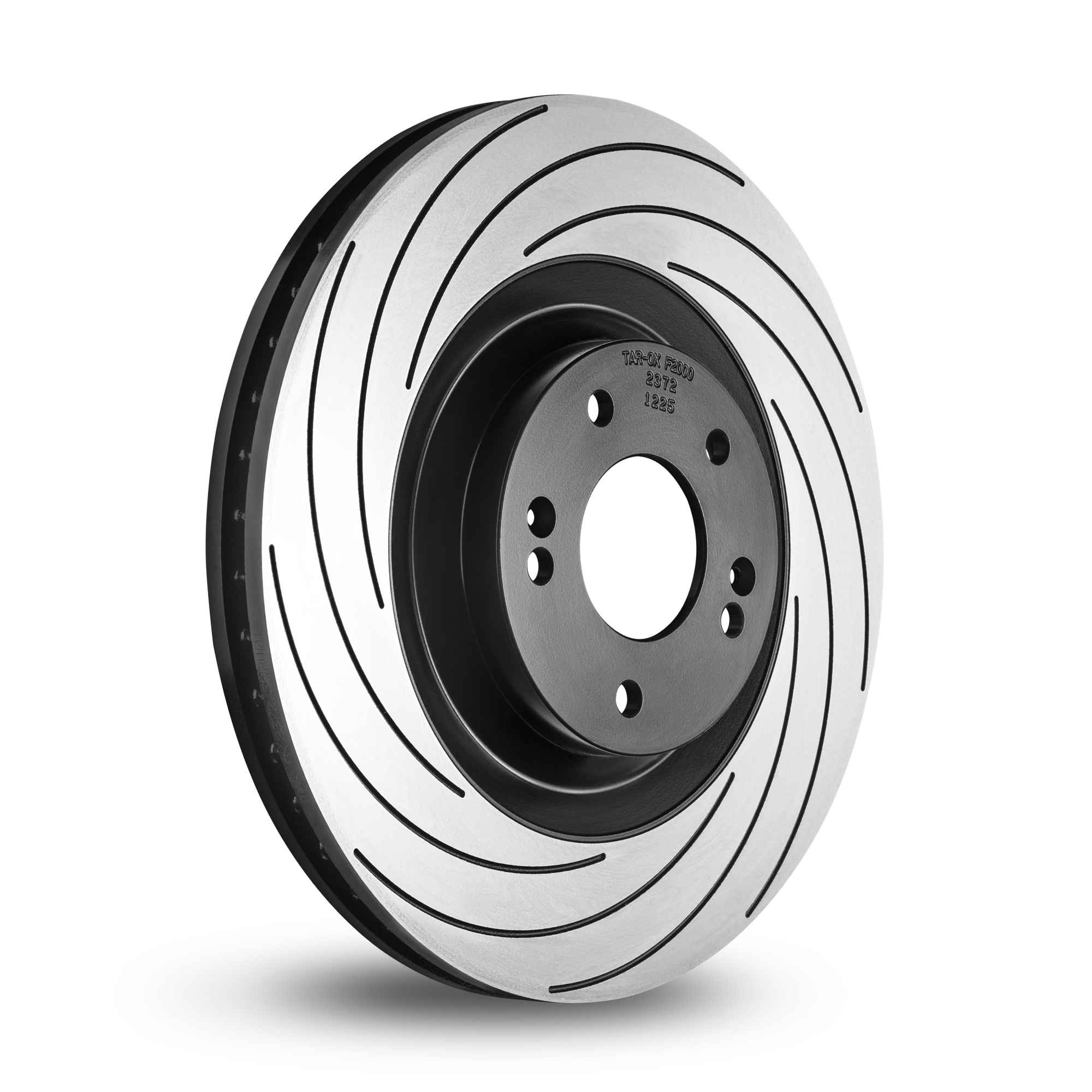
F2000

Deep spiral grooves designed for high operating temperatures. This is the face Tarox point at track days, touring car racing and hard driven hot hatches. If the car sees circuits on weekends, start here.
TAROX Sport Japan drilled and grooved brake disc

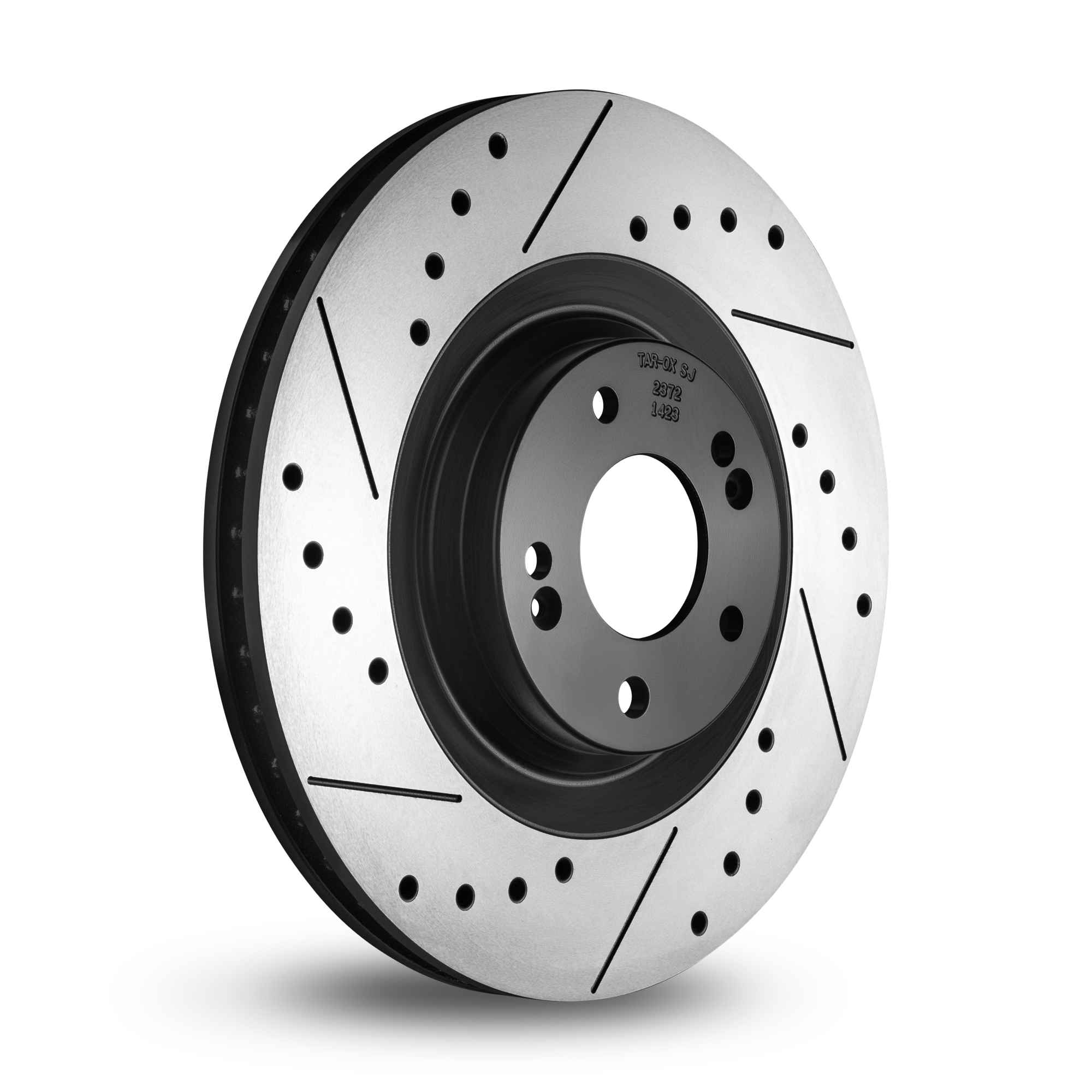
Sport Japan

Fully drilled with countersunk holes plus six grooves on the braking face. Built for the Japanese tuning market and the best of both patterns in one disc. The usual pick when the wheels show everything off.
TAROX D95 drilled brake disc

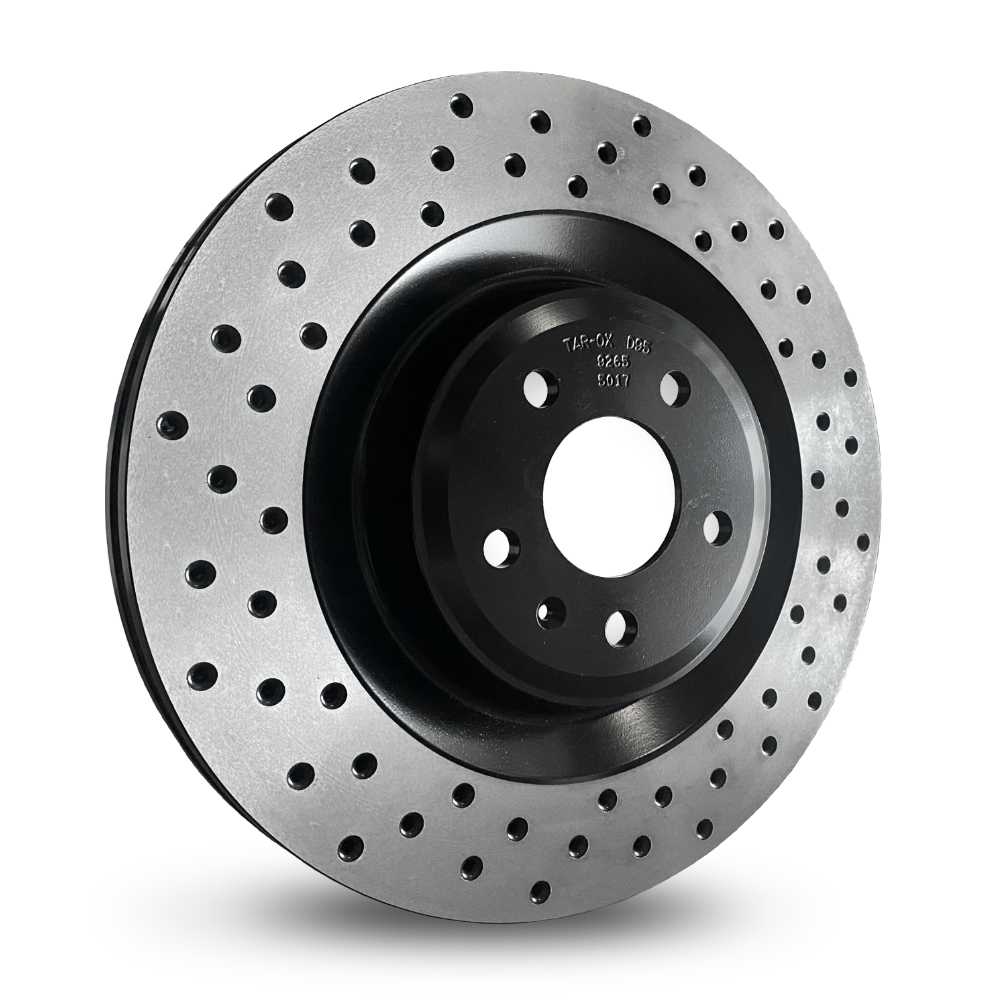
D95

Fully drilled, countersunk holes across the whole face. Aimed at high performance and track driven cars that want the heat and gas relief of a drilled face done properly, in a heat treated disc.
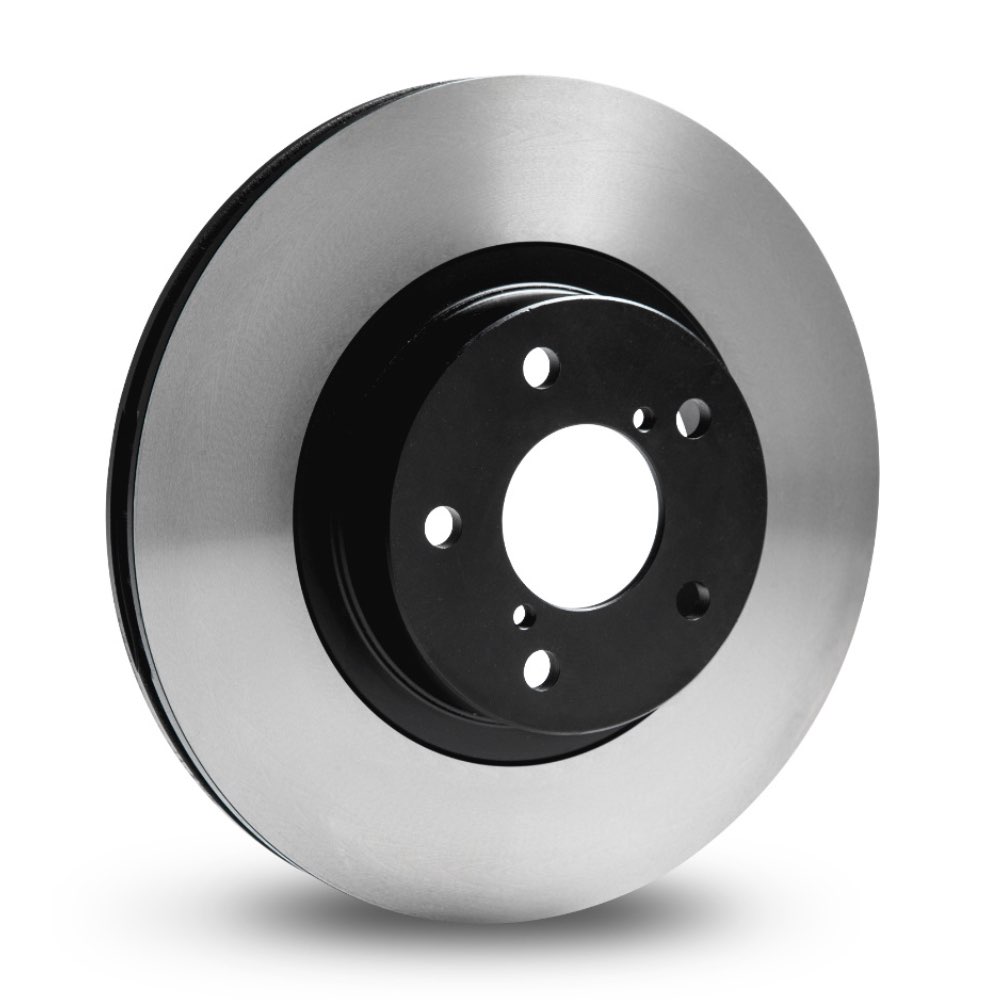
TAROX Zero plain face brake disc

Zero

Completely plain face. Circuit racing, Group N and endurance work. Not on the standard kit order form, so if you are building a race car, ring us and we will spec it with Tarox directly.
Every face compared

FaceMachiningBuilt forOur take
C836 straight groovesRoadThe quick daily's disc. Clean pad, easy manners
G8840 grooves per sideRoad, street buildsFull face sweep, the show and go option
F2000Spiral groovesFast road, track daysOur default for cars that get used hard
Sport JapanDrilled + 6 groovesFast roadBoth patterns, maximum presence behind the wheel
D95Drilled, countersunkFast road, trackDrilled done right, in heat treated iron
ZeroPlain faceCircuit, enduranceRace car answer, ask us to spec it

Descriptions of each face come from Tarox’s own range material. On the standard kit listings you choose from C83, F2000, Sport Japan and D95 at the same price, so the driving decides it.

Why these are two piece floating discs

Whichever face you pick, the disc underneath it is the same construction: an iron rotor bolted to a machined alloy bell, with the rotor free to grow as it heats. A one piece disc has nowhere to go when it expands, and hard use warps it. A floating rotor expands on its mounts and stays flat, and the alloy bell takes a useful amount of weight off the hub while it is at it. Every Tarox rotor is also heat treated, CNC faced and hand balanced to 0.05mm before it leaves the factory.

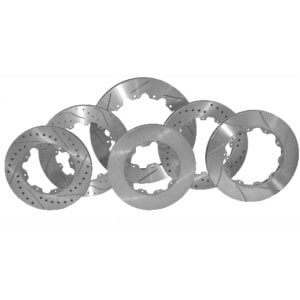
HiSpec build their kits in Dartford the same way, two piece floating discs made to order, and the face machining is specced per build, with grooved and cross drilled options in the catalogue. Tell us how the car gets used and we will put the right face on the order before it goes to the machine shop.

The face is chosen at order timeDisc style is a dropdown on every Tarox kit listing and a conversation on every HiSpec build. Nothing ships until the face matches the car, so if you are not sure, leave it blank at checkout and ring us on 0115 9893488. Two minutes with Cameron beats guessing.

Which face for which car

A quick daily that never sees a circuit wants the C83 or, if you like the look of the full sweep, the G88. Both keep the pad honest without eating it. A fast road car that does the odd track evening is F2000 territory, that spiral face was designed for exactly the heat a track day generates, and it still behaves on the school run. If the build is as much about how it looks through the spokes as how it stops, the Sport Japan and D95 carry the drilled face, done the proper way. And a genuine race build runs the Zero, because when brakes live at full temperature all day, plain iron and maximum contact is what lasts.

Garreth’s rule of thumb from the counter: buy the face for the hardest thing the car does, not the prettiest photo. A grooved disc on a show car gives up nothing, but a drilled disc on a car that gets driven to death on circuits is the wrong tool, however good it looks.

Three ways to buy it

The face question comes up in three places on the site. A full conversion kit changes calipers and discs together and asks you to pick the style at order. A big disc kit keeps your standard calipers and moves them out to a larger floating disc, the affordable first step. And if you already run our discs, replacement and bespoke rotors carry the same face options when the time comes. Three examples below, all built to order for the specific car.

  • ,

    £1,667.41 Excl. VAT Select options
  • ,

    £895.00 Excl. VAT Select options
  • From £140.00 Excl. VAT This product has multiple variants. The options may be chosen on the product page
    Quick add

Common questions

Do drilled discs crack?

Cheap ones did, and the reputation stuck. Discs with holes punched straight through a standard casting concentrate stress at every hole, and hard heat cycles find them. A Tarox drilled face is machined with countersunk holes into a disc that has already been heat treated, which is a different product solving the same brief. Our honest advice stands though: for a car that lives on circuits, choose the F2000 or the Zero and let the grooves or the plain face do the work.

Will grooves wear my pads faster?

Slightly, yes. Each groove wipes the pad face, and that wiping action is the point: it takes the glaze and the dead material off so the fresh pad underneath keeps biting. The trade is a little pad life for a lot of consistency, and on a performance car that is the right trade. If maximum pad life on a gently driven car is the priority, the C83's six grooves are the lightest touch.

Can I pick the face on any kit?

On the Tarox kit listings the style selector carries C83, F2000, Sport Japan and D95, all at the same price. The plain faced Zero is a race item we spec with Tarox directly, so ring us for that one. HiSpec kits are made to order in Dartford and the face is agreed per build, with grooved and cross drilled options available.

Is a plain disc fine on a road car?

Completely. Most cars leave the factory on plain discs and stop fine every day. The machined faces earn their keep when the car is driven hard enough to overheat pads and boil off friction material, which is when the wiping and venting starts to matter. If that never happens to your car, plain iron does the job, and the two piece floating construction is still worth having on its own.

Should the front and rear faces match?

Keep the same face on both axles when you can. The patterns behave slightly differently as they heat, and a matched pair keeps the balance of the car predictable as everything gets hot. If you are adding a rear kit to an existing front setup, tell us what face the fronts wear and we will match the build to it.

What we would actually order

On a quick daily, the C83 and no second thoughts. On anything that gets driven properly, road and the odd circuit, the F2000, the face we point most people at. For a build where the look through the wheel matters, the Sport Japan, and for a dedicated track or race car it is a conversation about the Zero. Any of them will stop the car properly; the job is matching the face to what the car actually does.

Not sure which one that is? Ring us on 0115 9893488 with the car, the wheels and what it does at weekends. Cameron will have a face and a kit size for you in about five minutes, and the kit gets built for exactly that answer.