

Getting Your Brakes Ready For A Track Day: Pads, Fluid And Bedding In
The call we get on a Monday is nearly always the same. The car was fine in the morning, then somewhere after lunch the pedal went long, the braking points moved twenty metres and the rest of the day was spent driving round the problem. Nobody had done anything wrong with the driving. The brakes had simply been asked to do something they had never done on the road.
Twenty minutes of circuit work puts more heat through a brake than a month of commuting. The good news is that getting a road car ready for it is cheap and it is mostly not about buying a bigger kit. It is three things: the fluid, the pads and giving both a chance to bed in before you lean on them.
- Fluid is the usual failure, and it is the cheapest thing on the list to put right
- Pad compound decides whether you have brakes on lap six, not just lap one
- Bedding in is not optional, and the procedure differs enormously between compounds
- None of this needs a big brake kit. Do it on the standard setup first
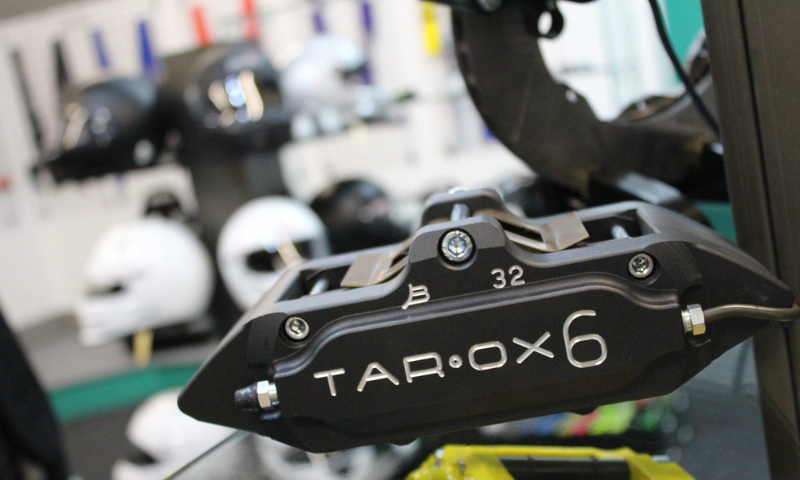
Fluid, the thing that actually boils
A long pedal at two in the afternoon is almost always boiling fluid, not worn pads. Brake fluid is hygroscopic, which means it pulls moisture out of the air through the hoses and the reservoir over time, and water lowers the temperature at which it boils. Boil the fluid and you are compressing vapour instead of pushing liquid, which is exactly what a pedal going to the floor feels like.
This is why fresh fluid is the single best value job on the car before a track day. It is cheaper than a set of pads, it takes an hour, and it addresses the failure that ruins most people’s first afternoon.
What the DOT numbers mean
The DOT ratings are minimum standards, and the figures below come from the standard itself, FMVSS 116. Two boiling points are specified for each: the dry figure for fresh fluid straight from a sealed container, and the wet figure measured after the fluid has been humidified to 3.70 per cent water by weight.
| Rating | Minimum dry boiling point | Minimum wet boiling point |
|---|---|---|
| DOT 3 | 205°C | 140°C |
| DOT 4 | 230°C | 155°C |
| DOT 5 (silicone) | 260°C | 180°C |
Look at the gap between the two columns and you have the whole argument for changing fluid. A DOT 4 fluid that starts at 230 degrees is only required to manage 155 once it has taken on that 3.7 per cent of water, and that drop is what a track day finds. The fluid does not have to be old to be past its best; it has to have been in the car.
Two practical notes. Match the rating your car’s handbook specifies, and if you are doing this regularly there are racing fluids sold well above the DOT minimums, which is what the numbers on their bottles are quoting. And treat DOT 5 as a separate thing entirely: the standard lists it as silicone based, a different chemistry from the glycol DOT 3, DOT 4 and DOT 5.1 fluids, so it is not a drop-in upgrade. Check the handbook before you go near it.
Pads for the day you are having
Once the fluid is sorted, the pad is what decides whether you still have brakes at the end of a session. A standard road pad is built for a low temperature window and it will fade when a circuit pushes it past that; you get a soft pedal, a smell, and a long walk back through the paddock in your head.
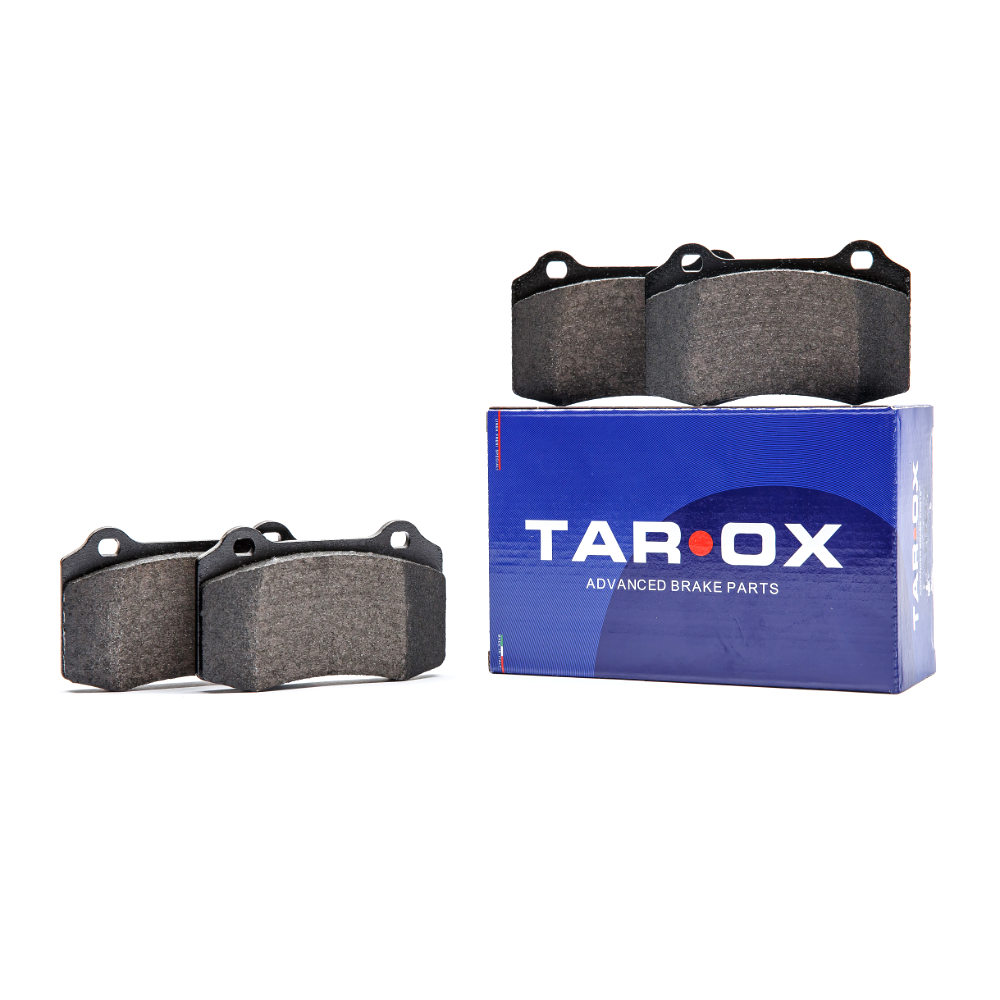
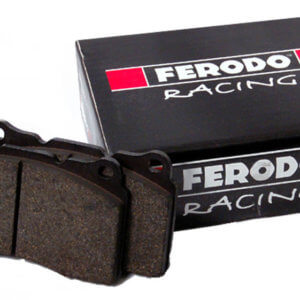
You do not need a race pad for a first track day, and you probably should not have one, because race compounds want heat before they grip and your drive home is cold. What you want is a crossover pad. On the HiSpec shelf that means EBC Yellowstuff or Mintex 1144 for occasional days, stepping to Mintex 1155 or the Ferodo DS2500 once you are doing it properly. On a Tarox kit the Corsa pads that come fitted already cover this ground. The pad compound guide works through all of them with prices.

Bedding in, and why it varies so much
Bedding in transfers an even film of pad material onto the disc face and squares the two surfaces up to each other. Skip it and you get judder, a pedal that never feels right, and a pad that fades early because only part of it is doing the work. Do it the week before, not in the queue at the circuit.
Here is the part most guides miss: the requirement is completely different depending on what you bought, and our own listings say so. EBC state that Redstuff, being a hard wearing pad, can take as long as 1,000 miles to bed while the pad takes up the shape of your disc. Ferodo describe the DS2500 as minimal bedding-in, supplied ready to use. Mintex say the M1155 gives first time braking with no special bedding requirements. Three pads on the same shelf, three completely different answers, so read the listing for the pad you actually bought.
The road procedure
EBC's guidance for street pads is to use them gently for the first 100 miles or so, and after around 300 miles of use you may get some smell or smoke as the surface volatiles burn off the first time the pads see 400 to 500 degrees. That is normal, and it is a sign they are working, not failing.
The track procedure
For track compounds EBC specify heat cycles, not miles. Their Bluestuff process is 8 to 10 hard stops until the disc goes past 430 degrees, a brief cool, then 6 to 8 more hard stops past 430 again, then at least 20 to 30 minutes of cooling, preferably overnight. Sintered pads need only a few snubs to mate.
With new discs as well as new pads, allow considerably longer. The two have to square up to each other, and you are looking for a blue grey contact band that spreads right across the disc face until it is close to full coverage. Until that band reaches both edges, the pad is not fully seated and the brakes are not ready to be leaned on.
The rest of the check
Ten minutes with the wheels off, the week before.
- Pad thicknessMeasure the friction material, not the backplate. A pad with a road-legal amount left can still be too thin for twenty hard minutes, because a thin pad heats through faster and takes the heat into the caliper and the fluid.
- Disc surface and thicknessLook for cracks running from the edge, deep scoring or a lip you can catch a nail on, and check the thickness against the minimum stamped on the disc or its hat. If you are replacing them anyway, the disc guide covers which face suits track use.
- HosesFlex each one and look for cracking, bulges or chafing where they pass a bracket. A tired flexible hose swells under pressure and takes travel out of your pedal in the exact conditions you least want it.
- Leaks and levelsCheck the reservoir and look behind each wheel for weeping at the caliper and the union. Any dampness is a job for before the event, not after.
- Wheel bolts and bearingsTorque the bolts properly and rock each wheel top and bottom. Play you would ignore on the road is play you will feel under braking.
On the day
Three habits that keep brakes alive, none of which cost anything. Give the brakes a couple of firmer stops on your out lap to bring some heat into them before the first proper braking point, because a cold pad on a warm disc is where most first-session offs come from. Do a cool-down lap at the end of every session instead of braking hard into the pit entry, and then keep rolling rather than parking on a hot pedal. And leave the wheels alone at lunchtime; a caliper you have just cooked is not the moment to be poking at it.
If the pedal starts going long during a session, come in. It will not fix itself, and the fix in the paddock is usually a cool down and a bleed. That is a job you can do, and it is a great deal cheaper than the alternative.
Common questions
Do I need a big brake kit for a track day?
No, and we sell them. A standard setup with fresh fluid, a crossover pad and healthy discs will do a first track day perfectly well. A bigger kit earns its money when you are consistently running out of thermal capacity, doing longer sessions, or carrying more speed and weight than the standard hardware was designed around. Do the cheap things first and find out what the car actually needs.
Do you sell brake fluid?
No. We sell kits, discs, pads and calipers. Fluid is a consumable and any decent motor factor stocks it. Match the DOT rating in your handbook, buy fresh and sealed, and if you are doing a lot of circuit work look at the racing fluids that quote figures above the DOT minimums.
How often should the fluid be changed?
Follow the interval in your car's service schedule as the baseline, and bring it forward if the car sees regular track use, because that is where the wet boiling point gets tested. Plenty of people doing several events a year change it annually and bleed it before an event. If you cannot remember when it was last done, that is your answer.
My pedal went long at the last event. Is the kit worn out?
Usually not. A long pedal that comes back once everything cools is the classic boiling fluid signature. Change the fluid, bleed it properly and check the flexible hoses before you spend anything on hardware. If the pedal stays long when cold, that is a different problem and worth a phone call.
Can I bed pads in on the circuit?
You can do the heat cycles there, but do the initial road miles first, and check the event allows it. Turning up with brand new pads and discs and going straight out is how people end up with judder and a wasted set. Fit them at least a week before and put some sensible miles on them.
What we would do
In order, and for most road cars this is well under two hundred pounds. Fresh fluid to the specification in your handbook, bled properly. A crossover pad to suit how often you are actually going to do this, which for a first or second event is the EBC Yellowstuff or the Mintex 1144. Then bed the pads in on the road the week before, following the procedure for the compound you bought, because they genuinely differ.
Do that and the car will still be stopping at four o’clock. If you are also working out what to wear and what to take, the first track day kit guide on GSM Performance covers the rest of it. And if you are not sure what pad suits your car and your calendar, ring us on 0115 9893488 with the car and how many days a year you are planning. Garreth will usually talk you into the cheaper pad.
How often should track day brake pads be replaced?
There isn’t a fixed mileage or time interval for this, it comes down to checking the pad rather than counting miles. Measure the actual friction material left, not the backplate, because a pad that still looks road-legal can be too thin for a hard track session and will heat through into the caliper and fluid faster than you’d expect.
If you’re doing regular track days, get in the habit of checking pad thickness before every event rather than waiting for a warning light. Same goes for fluid, most people doing several events a year change it annually and bleed it again before an event.