TAROX Brake Pad Compounds Explained: Strada, Corsa, Enduro and Enduro+
"Which TAROX pad should I pick?" is a fair question when one car can take five different compounds. Each compound is built for a different temperature, so the right one depends on how hot your brakes get. Strada suits the road, Corsa takes in track days, and Competizione, Enduro and Enduro+ are for racing. How the car is really used is the first thing Garreth and Cameron ask.
- Temperatures and friction figures are TAROX's own, taken from their pad listings
- Pad shapes for kit calipers taken from TAROX's replacement pad chart
- Advice from Garreth and Cameron at our Nottingham showroom
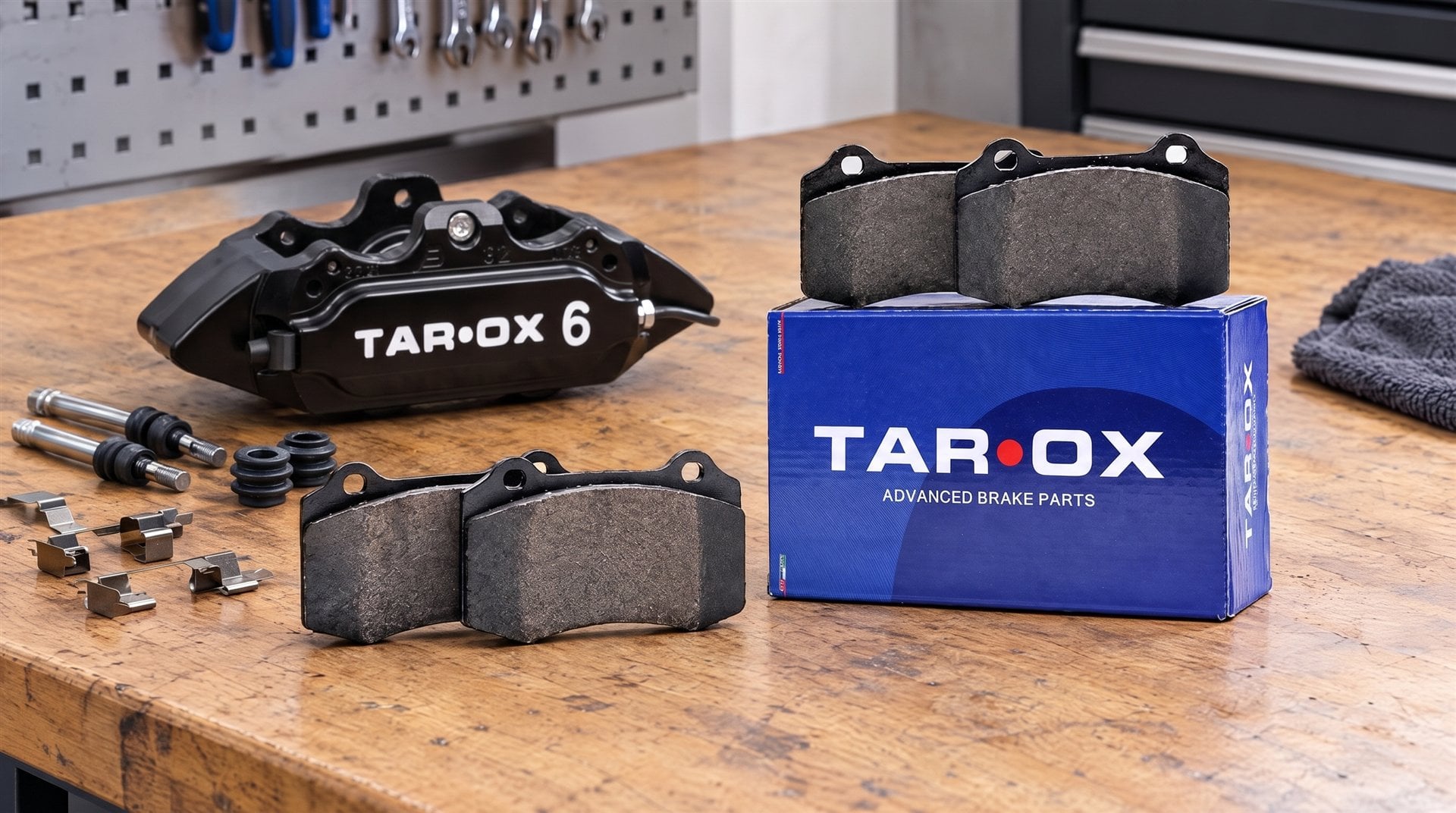
Corsa 114 suits most cars with a TAROX kit
Corsa is the pad TAROX fit to their own big brake kits. It works from cold, keeps working up to 650°C and has more bite than the Strada road pad. Go down to Strada for a daily driver that never sees a circuit, or up to Enduro or Enduro+ for competition.
- Strada (.112): road pad with wear indicators and comfort features where the original pads had them
- Corsa (.114): fast road and track days, works from cold, fitted in TAROX kits
- Enduro (.118) and Enduro+ (.119): competition pads with a flat friction curve
- Track compounds come without wear indicators or anti-rattle shims
How to read a TAROX pad code
Every TAROX pad carries a code in two parts, such as SP9220.114. The first part, SP9220, is the pad shape: the outline and backplate that fit your caliper. The three digits after the dot are the compound. A shape is made in several compounds, so the same caliper can take a road pad or a race pad.
On our listings you choose the compound from the Pad Compound drop-down. It only lists the compounds TAROX make for that brake setup, so some cars show all five and some show two or three.
| Code ending | Compound | Built for |
|---|---|---|
| .112 or .113 | Strada | Fast road and everyday driving |
| .114 | Corsa | Fast road and track days |
| .116 | Competizione | Pure racing |
| .118 | Enduro | Competition: GT, touring car, Formula and rally |
| .119 | Enduro+ | Competition only, more friction than Enduro |
The five compounds side by side
The optimum range is the temperature where a pad grips best, and the limit is the most heat it will take. Friction is shown as μ, the coefficient of friction: a higher number means more stopping force for the same pedal effort. TAROX quote it cold and hot.
| Compound | Use | Optimum range | Limit | Friction cold / hot | Wear indicators and shims |
|---|---|---|---|---|---|
| Strada .112 | Fast road, daily | 200 to 350°C | 600°C | 0.37 / 0.42 | Yes, where the original pads had them |
| Corsa .114 | Fast road and track days | 200 to 500°C | 650°C | 0.47 / 0.49 | No |
| Competizione .116 | Pure racing | 400 to 800°C | Over 900°C | 0.47 / 0.53 | No |
| Enduro .118 | Competition | 200 to 700°C | 800°C | 0.44 / 0.50 | No |
| Enduro+ .119 | Competition only | Same flat curve as Enduro | Not published | Higher than Enduro | No |
Strada 112: the road pad
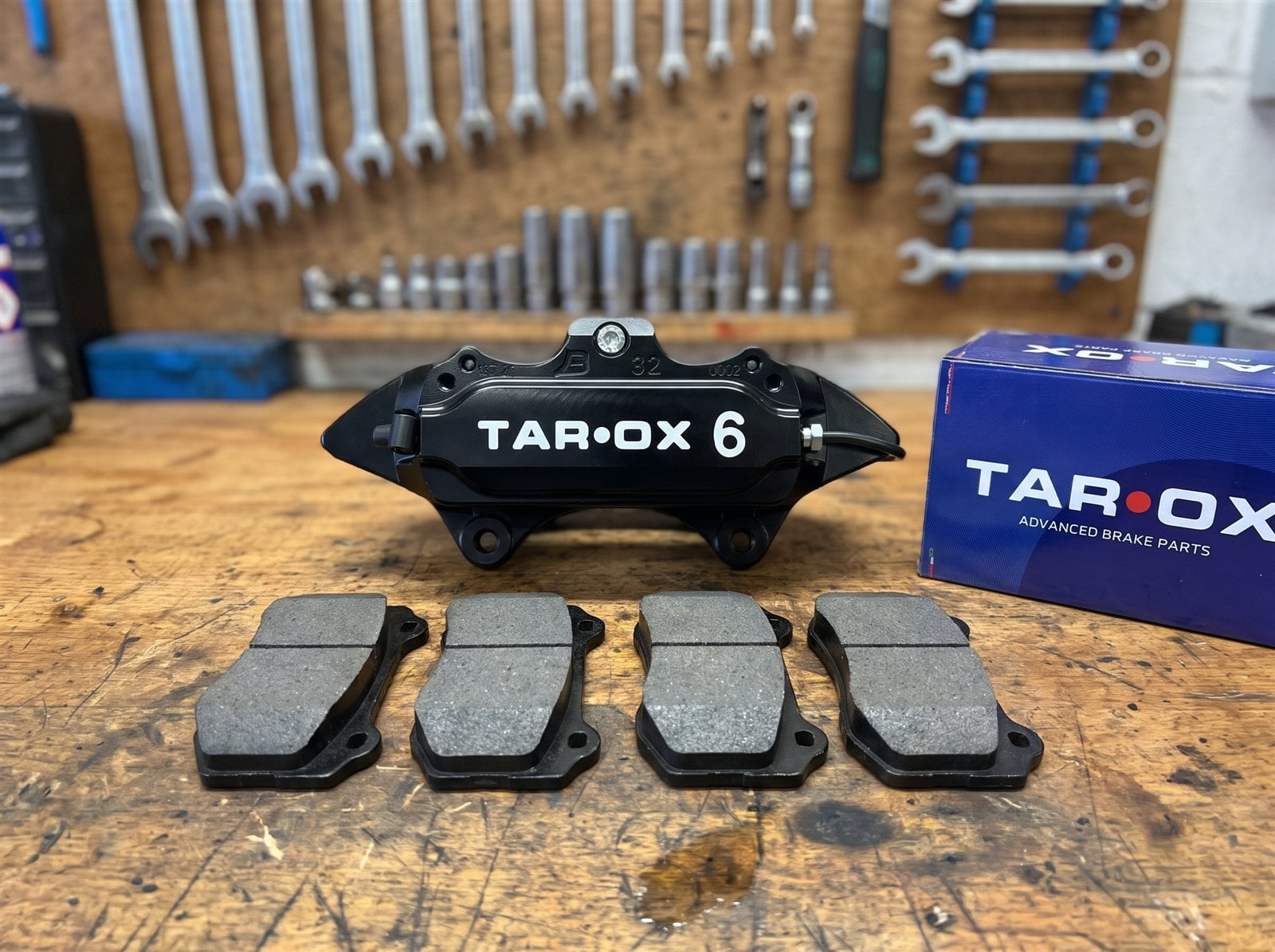
Strada is TAROX’s road compound. It works from cold with no warming up, so it bites from the first stop of the day. TAROX rate it at 0.37 μ cold and 0.42 μ hot, with an optimum range of 200 to 350°C and a limit of 600°C.
TAROX say it has more friction, better heat resistance and a longer life than most original pads, with progressive pedal feel, low noise and low disc wear. It is also the only TAROX compound supplied with wear indicators and comfort features, where the original pads had them. TAROX design it to work with their own performance discs.
TAROX say plainly that Strada is not for track use, so if the car goes on a circuit, even once a year, Corsa is the place to start.
Corsa 114: fast road and track days
Corsa is the compound TAROX fit to their big brake kits from new, and the one we suggest most. It is mainly a track day pad, yet TAROX say it also works well for fast road use on more powerful cars, because it is still effective from cold.
Corsa starts at 0.47 μ cold and holds 0.49 μ hot, so the pedal barely changes as the brakes heat up. The optimum range is 200 to 500°C and it keeps working up to 650°C. TAROX describe big bite and strong pedal feel, and say it is not hard on discs the way some track pads are.
Enduro 118 and Enduro+ 119: competition pads
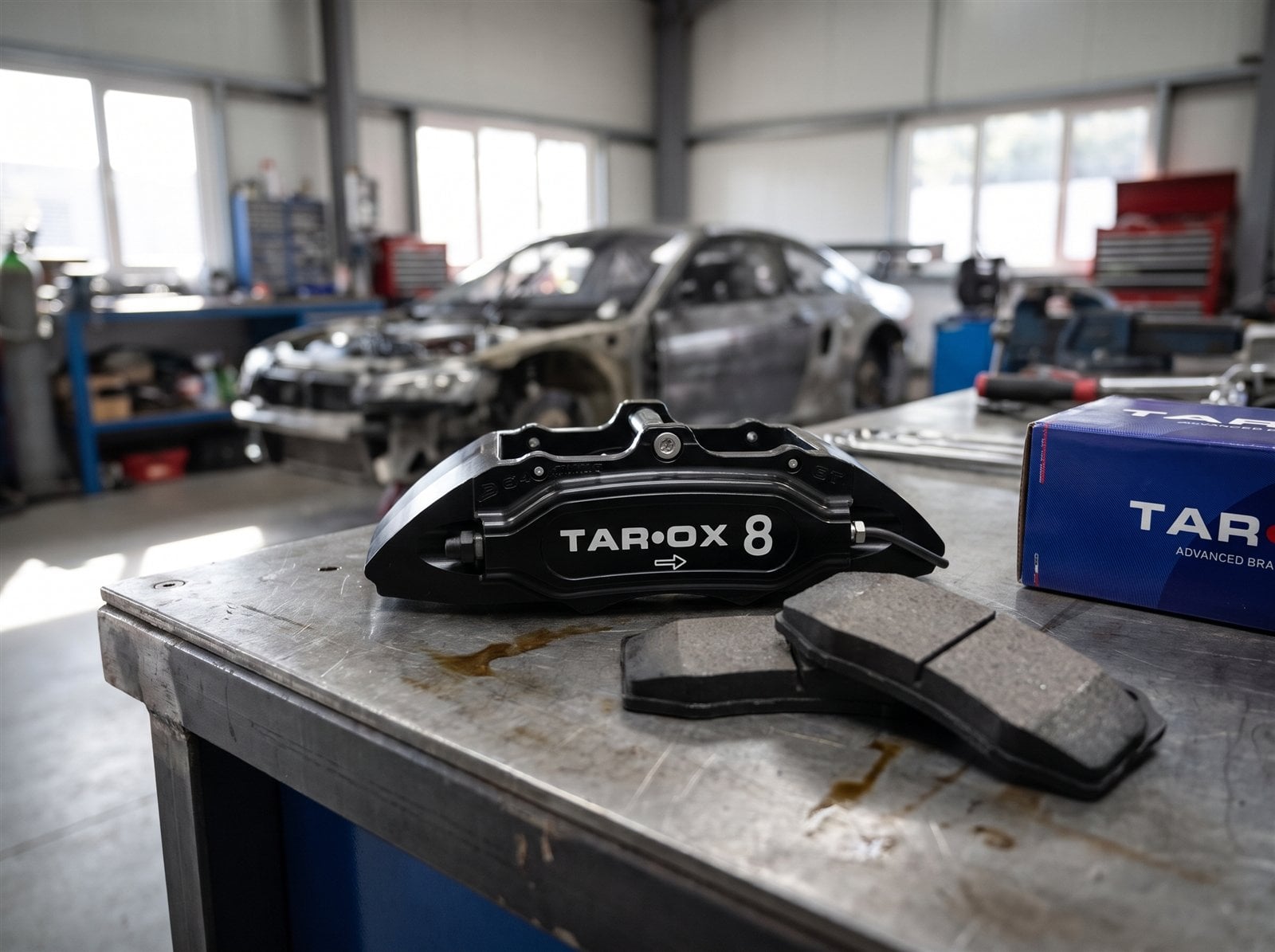
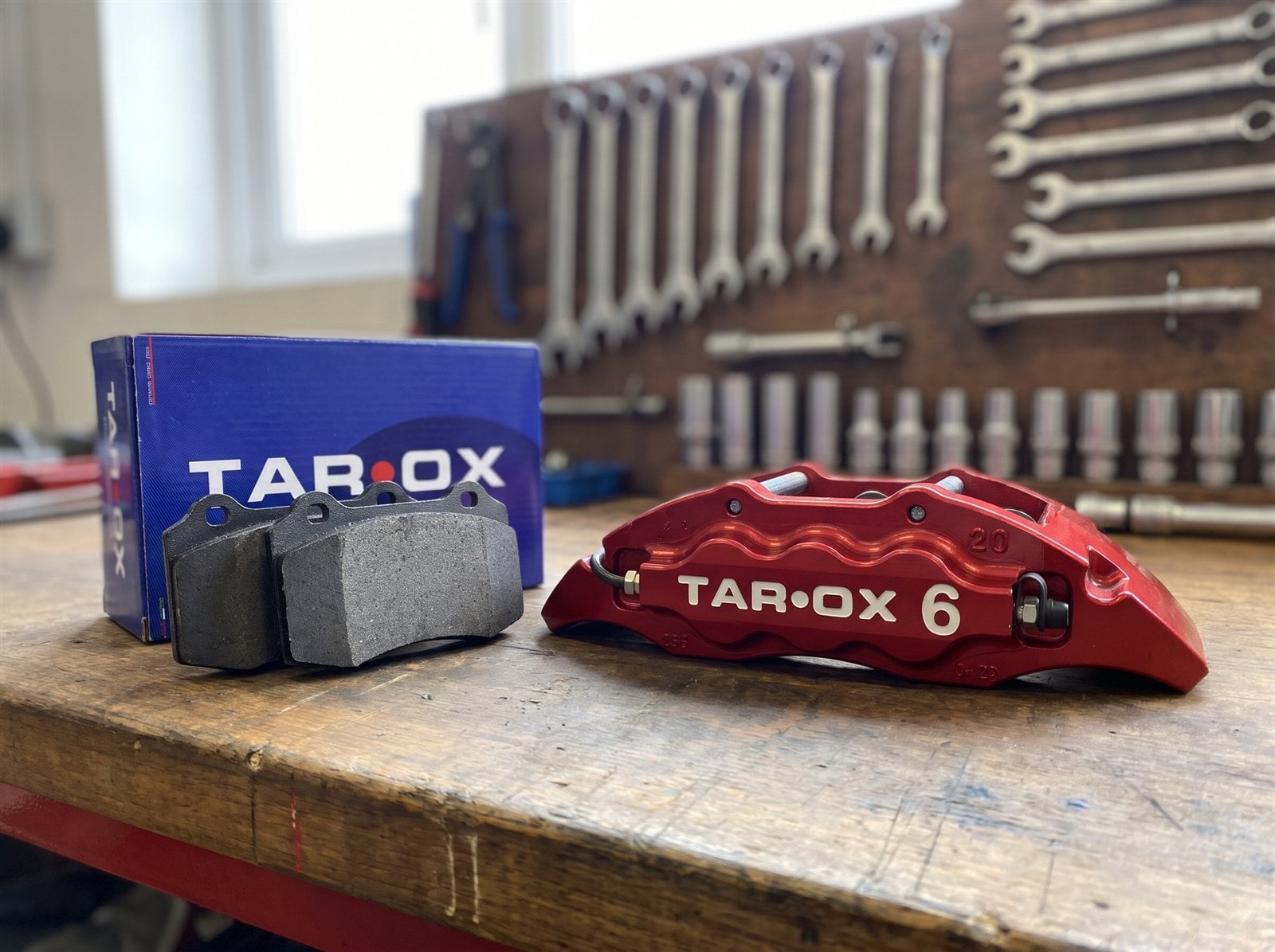
Enduro is TAROX’s competition pad for GT racing, touring cars, Formula cars and rally. TAROX built it for high friction, longer disc life and good modulation, which they say cuts the risk of locking a wheel compared with other pads of the same friction. Its curve is flat: 0.44 μ cold, 0.50 μ hot, an optimum range of 200 to 700°C and a limit of 800°C. TAROX call it their ultimate all round competition pad.
Enduro+ keeps the same consistent pedal through the temperature range and adds more friction, and TAROX list it for competition use only.
Choose Enduro when
you want the same pedal on the first lap and the last, on a car that races or runs long sessions.
Choose Enduro+ when
you like the Enduro feel but want more stopping force for the same pedal effort.
On the road
both are sold as off road and competition pads, with no wear indicators or anti-rattle shims.
Competizione 116: the original race compound
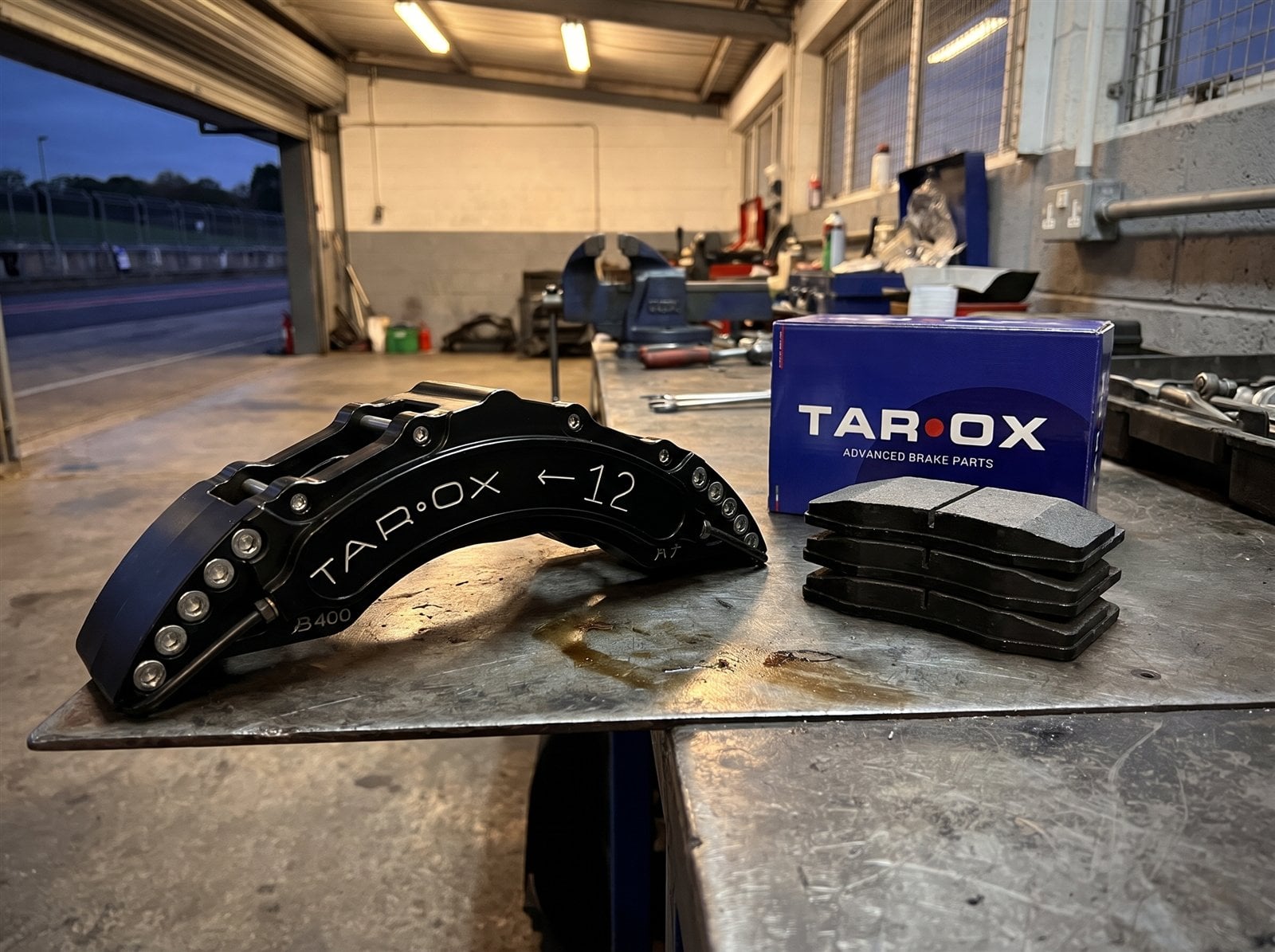
Competizione was developed on the race track for pure racing. It runs the hottest of the range: an optimum of 400 to 800°C and a limit of over 900°C, with 0.47 μ cold rising to 0.53 μ hot. TAROX describe a very hard pedal from low compressibility, an easy release that helps modulation, and steady output lap after lap.
It needs heat before it grips properly, so it suits a race car that gets its brakes hot early. TAROX now point racers to Enduro as the compound that has taken its place, and Garreth would start a new race build on Enduro too.
Which compound for which driver
Buy the pad for the hottest your brakes will ever get, then check you can live with it the rest of the time. Be honest about how many circuit days the car really does.
Daily driver
Strada: full bite from cold, wear indicators where the car had them, and no circuit use.
Fast road
Strada for a quick car driven on the road only, or Corsa for a powerful car driven hard or any car with a TAROX kit.
Track days
Corsa: it works from cold on the drive there and keeps working up to 650°C on the circuit.
Club racing
Enduro, or Enduro+ if you want more friction, with Competizione on request for a car that runs very hot brakes.
Endurance racing
Enduro: TAROX built it for a flat, predictable pedal and longer disc life over long stints.
Wear indicators and shims: road pads only
TAROX include wear indicators and comfort features, where the original pads had them, on their Strada pads only. Corsa, Competizione, Enduro and Enduro+ come without wear indicators, anti-rattle shims or vibration counterweights, because they are built for track use.
On a car that reads pad wear electronically, fitting a track compound usually means the sensor is left unplugged, so a warning light may come on. Cameron’s advice is to check the pads by eye at every service and before and after every track day. Without shims a track pad can also be noisier on the road.
Mixing compounds front and rear
Always fit the same compound on both sides of an axle, because a different pad left and right will pull the car to one side under braking.
Front and rear can differ. The front brakes do most of the work and get hottest, so a stronger compound at the front with a milder one at the rear is common, such as Corsa front and Strada rear on a fast road car. Avoid the other way round: a more aggressive rear pad than front moves the braking balance to the back as things heat up, and the rear can lock first.
Running a TAROX front kit with standard rear brakes? Tell us what is on the front and Cameron will match the rear pad to it.
Bedding in new pads
New pads need bedding in before you lean on them. It lays an even film of pad material on the disc face, which gives a smooth pedal and helps stop judder later. Whatever the compound, the method is much the same:
Start gently
Drive a few miles with light, early braking so the pads and discs settle together.
Build the heat
On a quiet, safe road, make a series of firm stops from moderate speed down to walking pace, without stopping completely.
Do not hold them
Never sit with your foot on the brake while the discs are hot; use the handbrake or keep rolling.
Cool it down
Drive on without braking hard so everything cools fully. Park up and let the discs go cold. Track compounds need more heat to bed, so finish the job on your first session.
Pads for TAROX big brake kit calipers
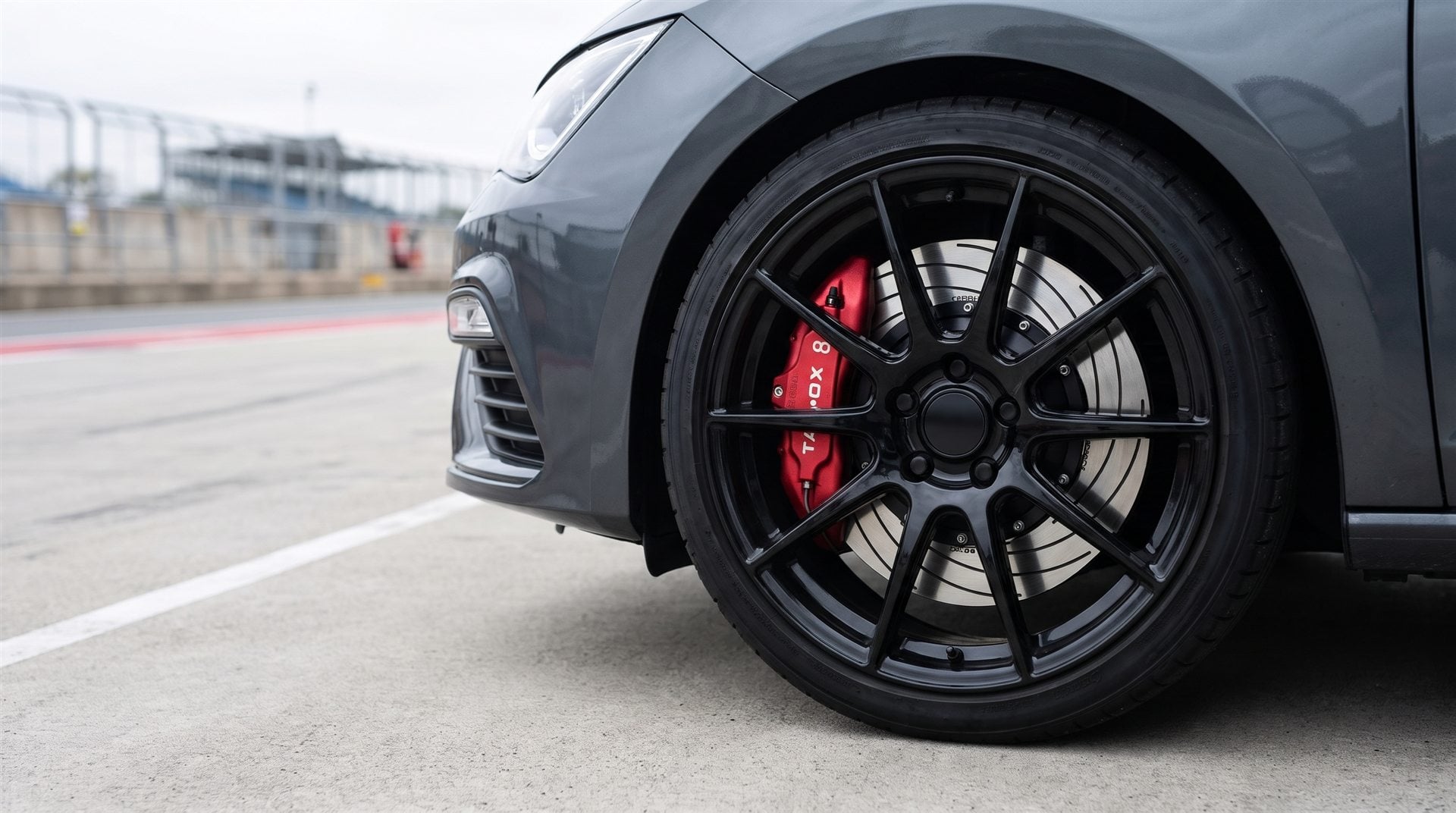
Every TAROX big brake kit leaves the factory with Corsa pads fitted. When they wear, or if you want a different compound, replacement pads come in sets of four for one axle. The pad shape depends on the caliper, which is named on your kit and stamped on the caliper body. Pick the shape from TAROX’s chart below, then choose the compound.
| Caliper | Years | Pad shape |
|---|---|---|
| B20 | All | SP0020 |
| B25S | All | SP0153M |
| B280 | All | SP0102 |
| B30 | All | SP0331 |
| B320 | All | SP0102 |
| B32, B33, B34GT, B360 | Up to 2018 | SP0239 |
| B32, B33, B34GT, B360 | 2018 onwards | SP0002 |
| B370 | All | SP0240 |
| B38R | All | SP2106 |
| R380 | All | SP0003 |
| B40R | All | SP0331 |
| B400, B400RT | All | SP0225M |
Kit pads come in Strada, Corsa, Enduro and Enduro+. Not sure which caliper you have? Send Cameron a photo of the caliper or your invoice and he will confirm the shape.
TAROX front kits come in the four ranges below. For the back of the car there are rear caliper kits and rear big disc upgrades.
Questions about TAROX pad compounds
Which pad comes in a TAROX big brake kit?
Can I use Corsa pads every day?
Can I use Strada pads on a track day?
What is the difference between Enduro and Enduro+?
Why does my track pad not have a wear sensor?
Can I run different compounds front and rear?
Do you have a guide to pads for Hi Spec kits?
Garreth and Cameron's view
Garreth
Garreth's top tip
For most people with a TAROX kit, Corsa is the answer. It is the pad TAROX put in the box. It works from cold and it takes a track day in its stride.
Strada is the pick for a car that never goes near a circuit and needs its pad wear warning, and Enduro is where a race car starts. Tell us what the car really does and we will point you at one compound.
Cameron
Cameron's fitting view
Match the pad shape to your caliper first. The caliper name is on your kit paperwork. If it is not, send me a photo and I will check it.
Whatever compound you choose, bed it in properly and check track pads by eye, because there is no wear sensor to tell you.
Not sure which compound to choose?
Ring us with your car, the brakes it runs and how many track days it really does a year. Cally, our digital receptionist, takes your details and Cameron comes back to you with the compound we would fit.